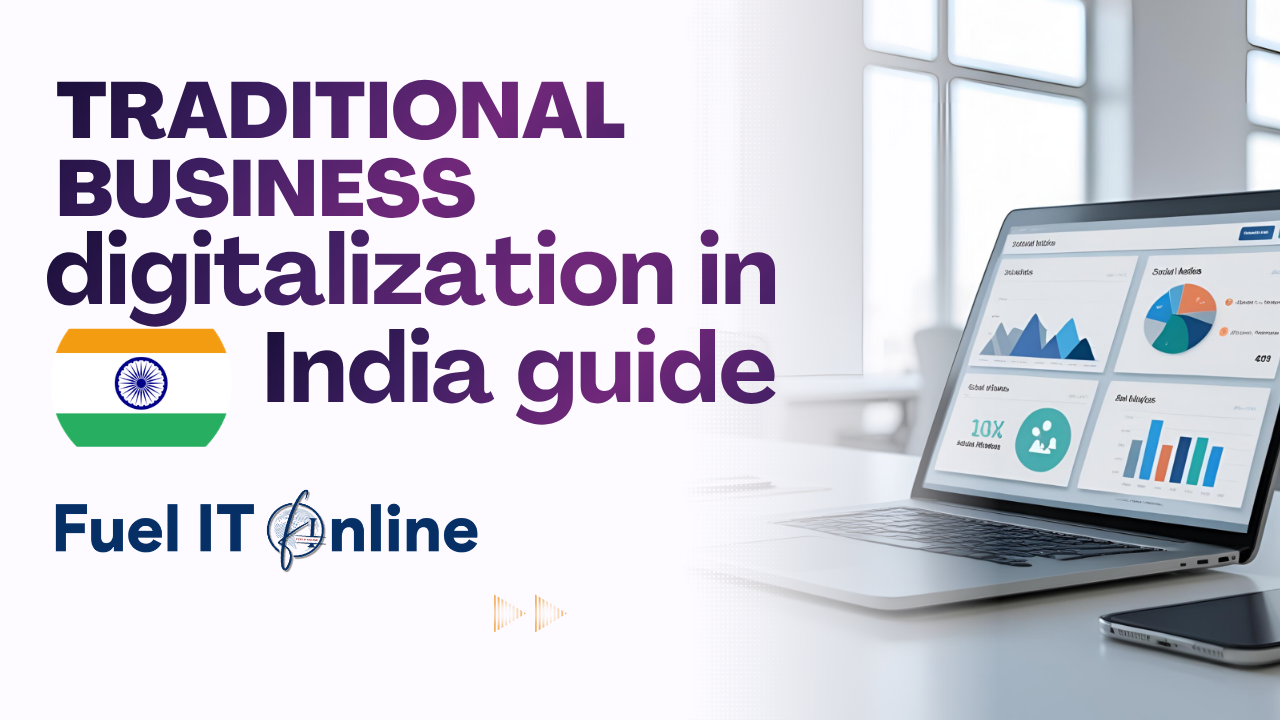
India’s businesses like family-owned wholesalers, B2B manufacturers, and traditional retail stores have been strong for many years. At the same time, these businesses have built trust, strong customer relationships, and reliable supply chains over time. However, with the rapid rise of e-commerce and digital platforms, many owners now feel the pressure to adapt. This shift is known as traditional business digitalization, where old business models are upgraded with modern tools like websites, CRM systems, automation, and digital marketing.
The challenge is that many business owners find the digital world confusing and don’t know where to start. As a result, they either delay the process or spend money on tools that don’t give proper results.
The truth is that successful traditional business digitalization is not about rushing—it is about following a clear, step-by-step roadmap while preserving the core values of the business.
Phase 1 – Building the Foundation of Traditional Business Digitalization(Month 1.3)
Before spending on ads a business needs a digital presence. This is like cleaning up your shop and putting up a sign.
Responsive website:
Your business needs a fast and mobile-friendly website that shows what you sell or make. It doesn’t have to be an online store at first; a digital catalog is a good start.
Local Footprint:
Similarly, for wholesalers and retailers being known locally is key. Setting up and optimizing a Google Business Profile helps nearby clients find your business with the phone numbers, directions and hours.
Phase 2: Internal Systems in Traditional Business Digitalization (Month 4. 6)
Once the external foundation is set it’s time to improve the backend. Even today,many traditional businesses still use paper diaries or spreadsheets for orders, which can lead to stock issues and delayed deliveries.
Inventory Automation:
As a solution, Switch from registers to basic cloud-based inventory software. As a result, this gives you a picture of your stock in real-time across all warehouses.
Custom CRM:
Similarly, use a Customer Relationship Management (CRM) tool to track client inquiries purchase histories and payments. Automation helps ensure orders don’t get lost between teams.
Phase 3: Growth Strategy for Traditional Business Digitalization (Month 7+)
When your website and backend are ready should you focus on growth.
SEO (Search Engine Optimization):
In addition, invest in long-term growth by optimizing your website content. This helps B2B buyers find your business naturally on search engines.
Performance Marketing:
Run targeted ads on platforms like Google Search, LinkedIn (for B2B clients) or Meta (for B2C consumers). Since your systems can handle volumes your marketing spend will lead to smooth fulfillment and repeat business.
Future of traditional business digitalization in India
In the end, going digital isn’t about changing your values; it’s, about making them stronger. By breaking down the transformation into clear phases legacy Indian businesses can easily go digital without disrupting their daily operations. This way they can turn their strengths into modern digital success.